Generator will not start
No crank, low starting-battery condition, overcrank, a fuel-related issue or a controller fault can prevent a standby unit from supplying power. Record the exact alarm if available.
A generator that fails during a utility outage needs careful fault diagnosis—whether it will not crank, shuts down after starting or runs without energizing the intended home circuits. Emergency troubleshooting is available; call 805-991-2639 to discuss the problem and confirm assistance.
Explore the approach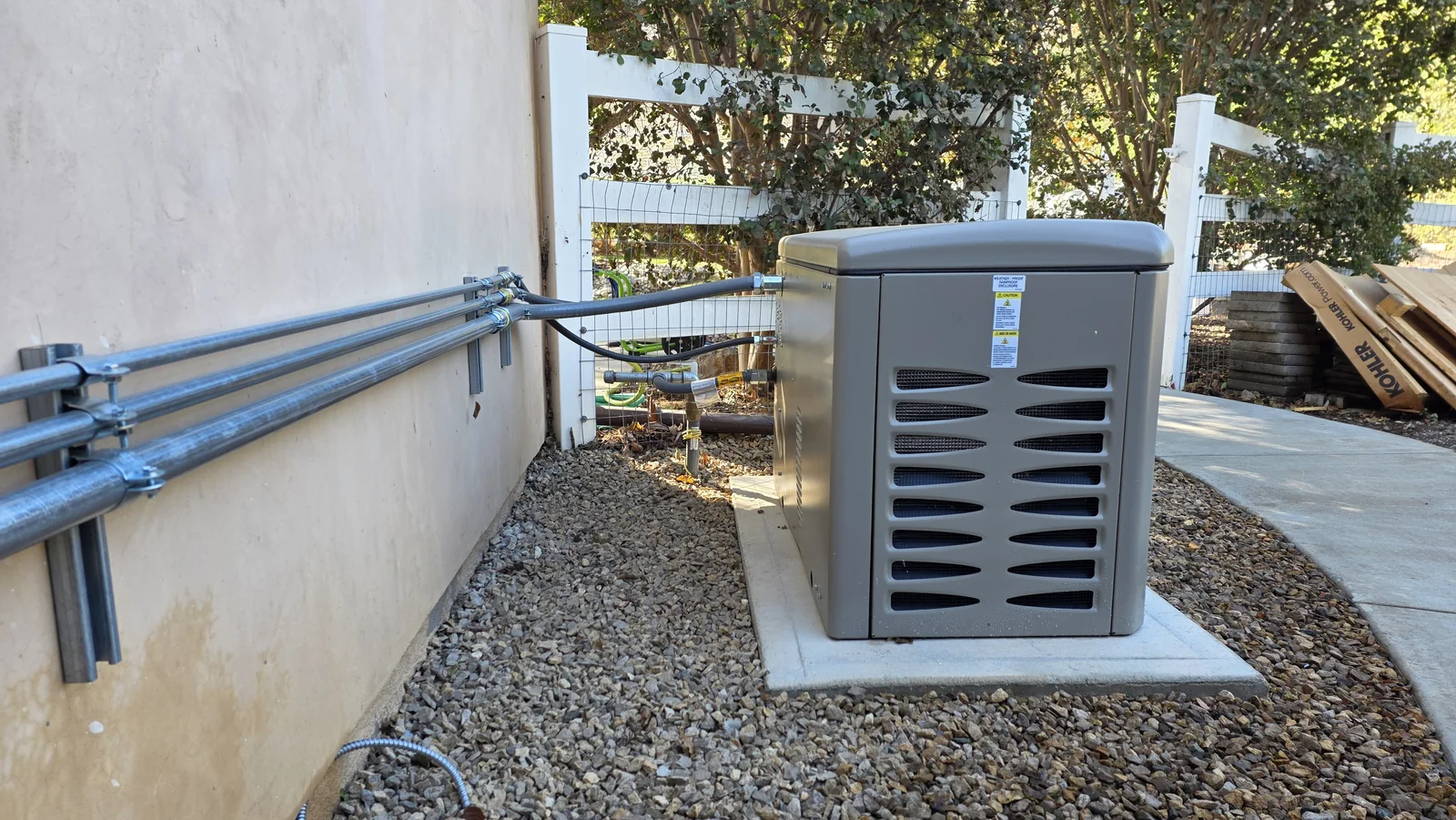 RESIDENTIAL BACKUP POWER · PROJECT REFERENCE
A displayed controller alarm, generator model and a description of what happened can help distinguish engine, controls, battery, fuel and transfer-system conditions. Do not defeat protective shutdowns or operate exposed transfer equipment.
Similar symptoms may have different causes. The safe approach is to document what you can observe and leave electrical, fuel and protective-control diagnosis to appropriately qualified personnel.
No crank, low starting-battery condition, overcrank, a fuel-related issue or a controller fault can prevent a standby unit from supplying power. Record the exact alarm if available.
Low-oil-pressure alarms, sensor faults, charging problems, engine controls and fuel problems can produce early shutdowns. A protective alarm should not be repeatedly reset or bypassed.
A running engine does not prove generator voltage is reaching the intended circuits. Transfer controls, breakers and automatic transfer equipment require qualified diagnosis.
Rodents, corroded connections, control wiring, aging batteries and neglected maintenance can contribute to failures. Correct identification and suitable replacement parts matter more than guesswork.
Note make and model, controller error, whether the engine cranks or runs, whether any circuits have power and whether maintenance was recently completed.
If you smell gas, see smoke or suspect immediate danger, leave the area and call the appropriate emergency service or utility. Never backfeed through an outlet or defeat transfer protections.
A qualified professional would evaluate the relevant starting system, engine, fuel conditions, controller and transfer equipment using manufacturer procedures.
When safe and authorized, testing should establish the corrected behavior, including transfer/retransfer when appropriate. Record limitations and follow-up requirements.
Protective shutdowns can result from different engine, sensor, control or fuel-related conditions. The controller’s exact message, the generator model and the sequence of events are essential clues. Avoid repeatedly resetting the alarm or bypassing a safety device; have qualified personnel diagnose the cause.
The problem may be in the transfer switch, generator output, breakers, control wiring or the circuits intended for backup. An operating engine alone does not confirm that power was transferred. Do not open the automatic transfer switch or handle potentially energized conductors.
Emergency generator troubleshooting is available, but 24/7 dispatch and guaranteed response times are not offered. Call 805-991-2639 to describe the failure and confirm available assistance. Any regulated electrical repairs require appropriately licensed personnel. For immediate safety hazards, contact the utility or emergency services.
For a gas leak, visible smoke or immediate electrical hazard, move away and contact emergency services or the utility. The website information-request form is not a live emergency dispatch channel; call 805-991-2639 to discuss generator trouble.
This page describes generator care for educational purposes. No construction contracts or service appointments are available through this website.