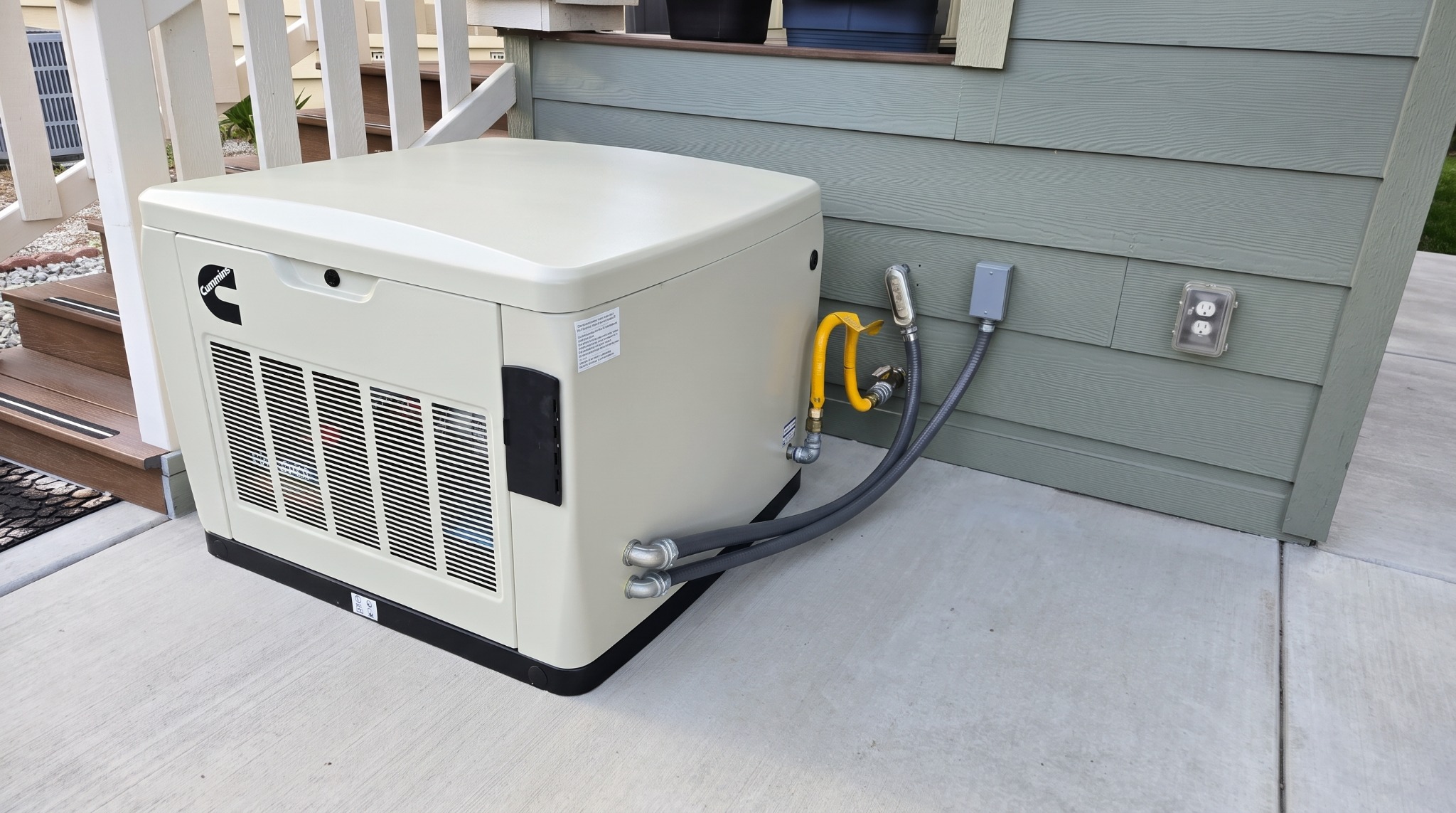
A reliable standby installation starts with the home's actual electrical loads and ends with a coordinated, tested system. Every piece matters: generator, transfer equipment, distribution, fuel, controls and installation workmanship.
RESIDENTIAL STANDBY PROJECT / NEWBURY PARK
THE COMPLETE STANDBY SYSTEM
Seven parts. One coordinated system.
When every part works together, backup power feels simple. Here are the seven essentials behind a well-planned home standby system—and why each matters.
Planned with precision. Built with care.
It starts with site-specific load calculations: what your household needs, motor starting demands, and what may run at the same time. That plan guides equipment selection, quality materials, clean routing and functional testing—so the system is practical to use and maintain.
01
Standby generator
Backup power sized for your home
This permanent outdoor power source starts automatically during an outage. Choosing the right size means considering what your family wants to keep running—such as lights, refrigeration and air conditioning—and how much power those appliances need.
02
Automatic transfer switch
Power changes over automatically
When utility power fails, the switch safely separates the home from the grid. Once the generator has started and is ready, it transfers the connected circuits to backup power, then switches back when utility service returns. A 200 A service or switch rating is not the generator’s output.
03
Electrical distribution
Power delivered to the right circuits
Your home’s panels and breakers determine where generator power can go. Checking the existing equipment helps identify which circuits to back up and whether electrical updates are needed for safe, organized connections.
04
Natural gas or propane supply
Enough fuel for dependable operation
The generator needs fuel even when the rest of your home is using gas. Planning considers generator consumption, existing gas appliances, pressure, meter or tank capacity and piping distance—not just the generator size.
05
Load-management controls
Smart handling of large appliances
Air conditioners and pool pumps can use a lot of power, especially when starting. Where compatible, controls can temporarily pause or stagger selected appliances to help prevent overloads. A/C soft starts can also reduce startup demand; the total load still needs to be calculated.
06
Equipment placement & preparation
A clean fit for your property
The right location balances safety clearances, exhaust, sound, drainage and access for future service. It also allows for a stable mounting surface or pad where needed, with electrical and fuel connections routed neatly.
07
Monitoring & operating controls
Simple checks and useful alerts
The generator controller manages starting and scheduled exercise runs. Depending on the model and connected features, monitoring may show system status, maintenance reminders and fault alerts—helping you spot issues before an outage.
FROM ASSESSMENT TO HANDOVER
A clear plan. A carefully tested system.
01
Understand your home
Start with the lights, refrigeration, A/C and other appliances that matter most. Review how much power they need—especially when several run together—so the system is sized around your household.
02
Make a clear plan
Map out the equipment, gas and electrical connections, permits, utility requirements and qualified trades involved. Defining the details and responsibilities early helps avoid surprises later.
03
Install with care
Prepare a suitable location, use quality materials and route piping and conduit neatly. Proper clearances, accessible equipment and respect for the surrounding property are part of good craftsmanship.
04
Test it and walk you through it
Qualified parties complete required startup checks and simulate an outage to check the changeover to generator power and back. Then review the controls, emergency shutdown, routine care and test records with the homeowner.
REAL PROJECT / GENERATOR & ELECTRICAL EQUIPMENT
ACTUAL PROJECT EXAMPLES
Different homes. Different system decisions.
These project profiles show how distribution, equipment demand, gas and field routing influence the overall installation.
Automatic + managed standby · Santa Rosa Valley
Kohler 26RCA + Electrical Infrastructure Upgrade
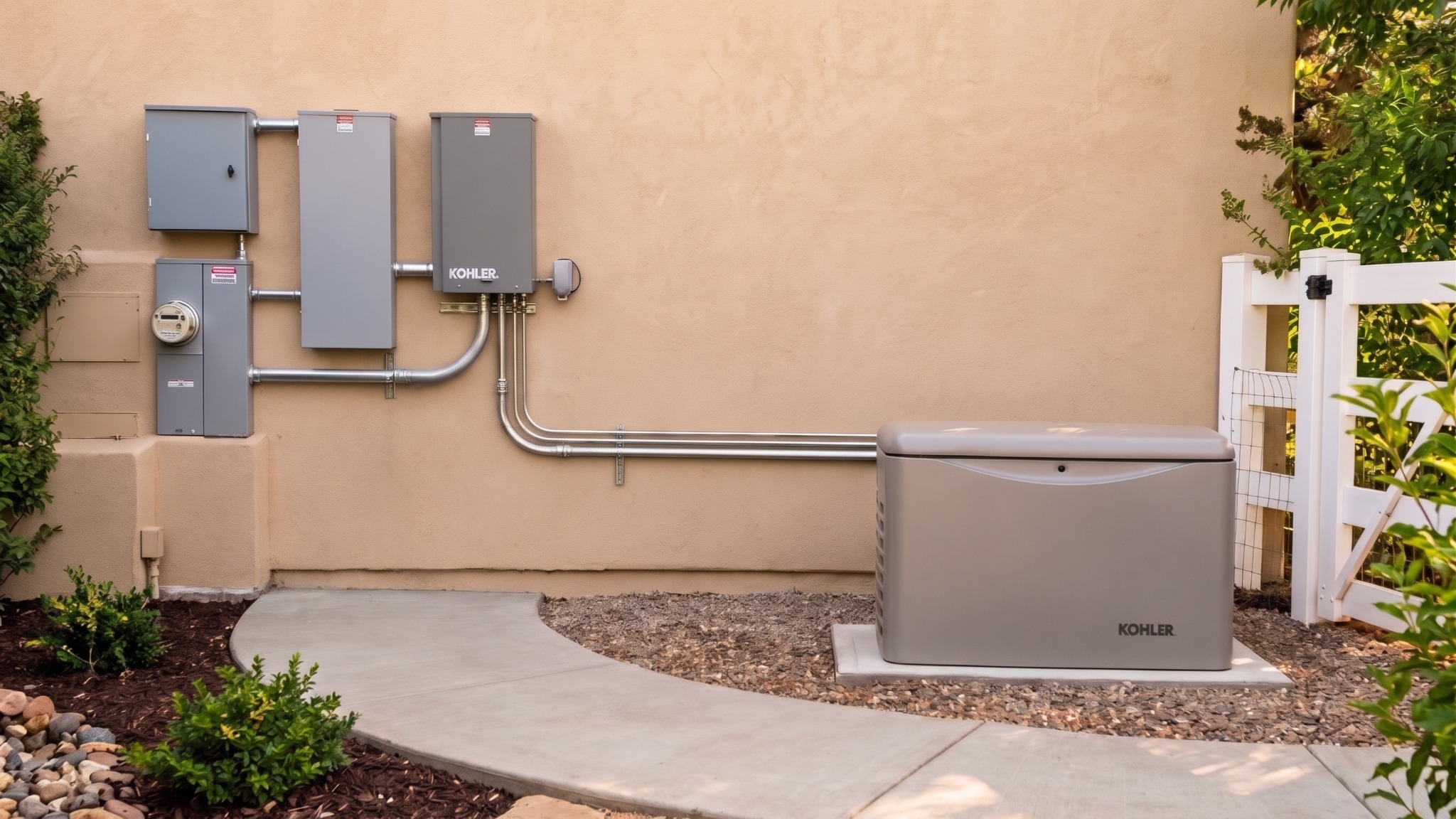
A complete standby-power scope: new 200 A Siemens meter-main and outdoor distribution equipment, Kohler automatic transfer, branch-circuit transitions, surge protection, underground natural-gas piping and three priority-managed loads.
A natural-gas installation with automatic transfer and under-house electrical/fuel routing demonstrates how site access and existing distribution shape the solution.