Protect the essentials
Prioritize the refrigeration, lighting, communication equipment, and other selected circuits that should stay powered when the grid is down.

Automatic load management can help a standby generator support more of the home by prioritizing large electrical loads rather than allowing everything to demand power at once.
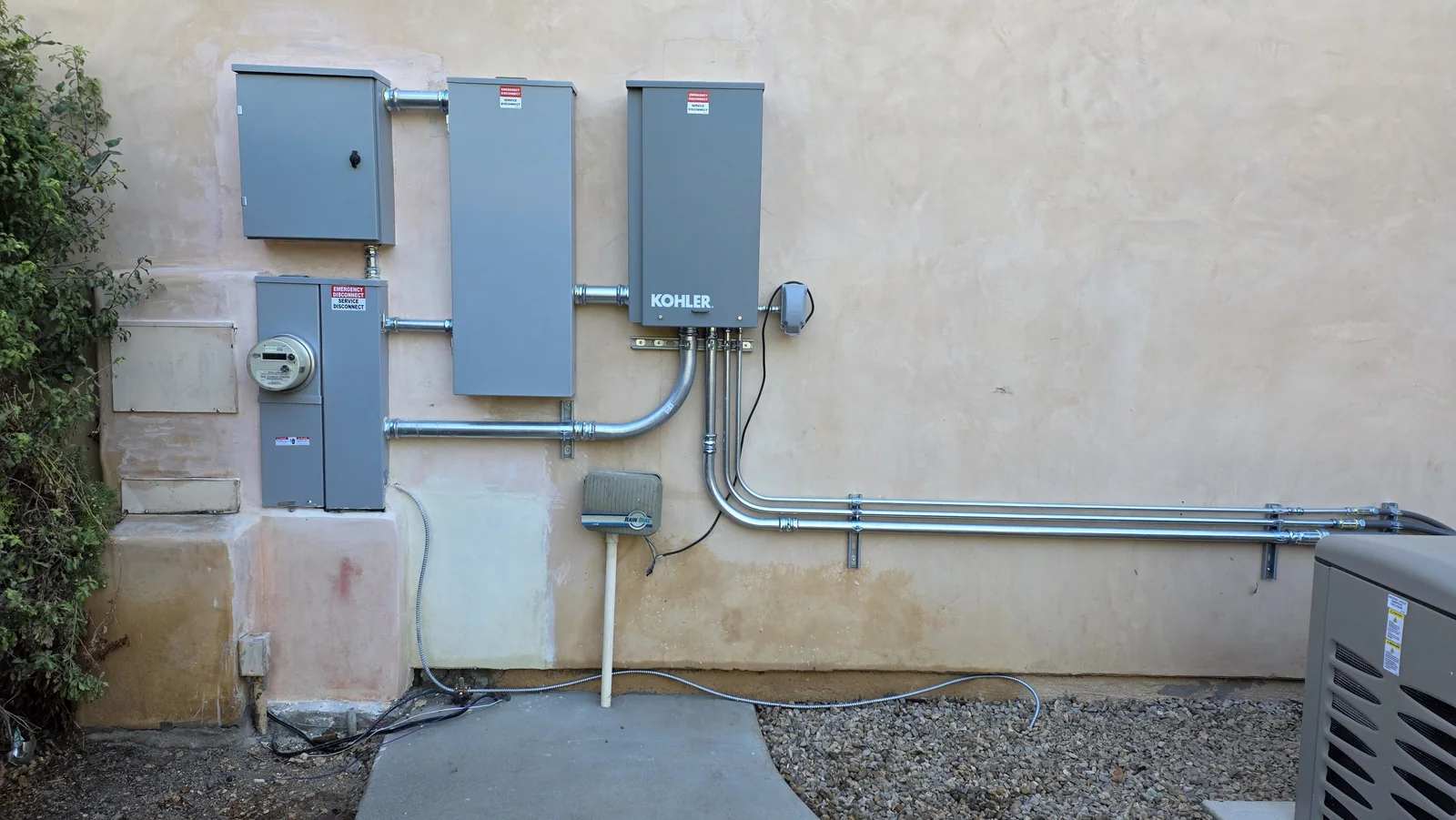
The goal is to keep essential loads available and coordinate larger demands—such as air conditioning, pool equipment, and electric heating—without exceeding the generator’s capacity.
Prioritize the refrigeration, lighting, communication equipment, and other selected circuits that should stay powered when the grid is down.
Air conditioning is often one of the largest demands. Approved load-management controls can pause selected units as demand rises and allow them to return when capacity is available.
Compatible soft-start equipment can reduce an air conditioner compressor’s starting current. It does not eliminate the unit’s normal running demand or replace proper load sizing.
Imagine a home with two air-conditioning systems and pool equipment. When electrical demand climbs, selected loads can be paused in a programmed order while essential circuits remain prioritized.
Selected HVAC and pool equipment may operate along with essential circuits while the actual generator demand remains low enough.
Loads that are paused can be restored automatically when generator capacity allows. The starred “available” state does not guarantee a load is running.
Illustrative priority sequence drawn from a residential system-planning example, not a universal generator feature or a live load calculation. Only specifically controlled circuits are automatically shed; starting current, uncontrolled loads, generator ratings and site-specific configuration must still be checked.
A good backup-power concept weighs electrical demand, customer priorities and generator/fuel capacity together. Breaker ratings alone are not an accurate measure of whole-home demand.
Identify appliances and equipment, including running demand, motor starting characteristics and likely simultaneous usage.
Separate what must remain available from comfort equipment that can temporarily wait.
Determine which compatible loads can be shed and automatically restored, using equipment suited to the generator and transfer architecture.
Account for fuel supply, generator ratings, load-management compatibility, and site-specific testing by appropriately qualified professionals.
Sometimes. It depends on each unit’s starting and running requirements, other active household loads, generator capacity, and how the air conditioners are managed. Load management may sequence or temporarily shed one system instead of operating both at once.
A soft start helps reduce the electrical current required when an air-conditioning compressor starts. Load management responds to overall generator demand by temporarily disconnecting or delaying selected loads. The two approaches can complement each other, but serve different purposes.
No. It is designed to manage competing loads so the generator stays within its available output. Essential equipment and selected comfort loads may operate, but high-demand appliances can be temporarily paused.